
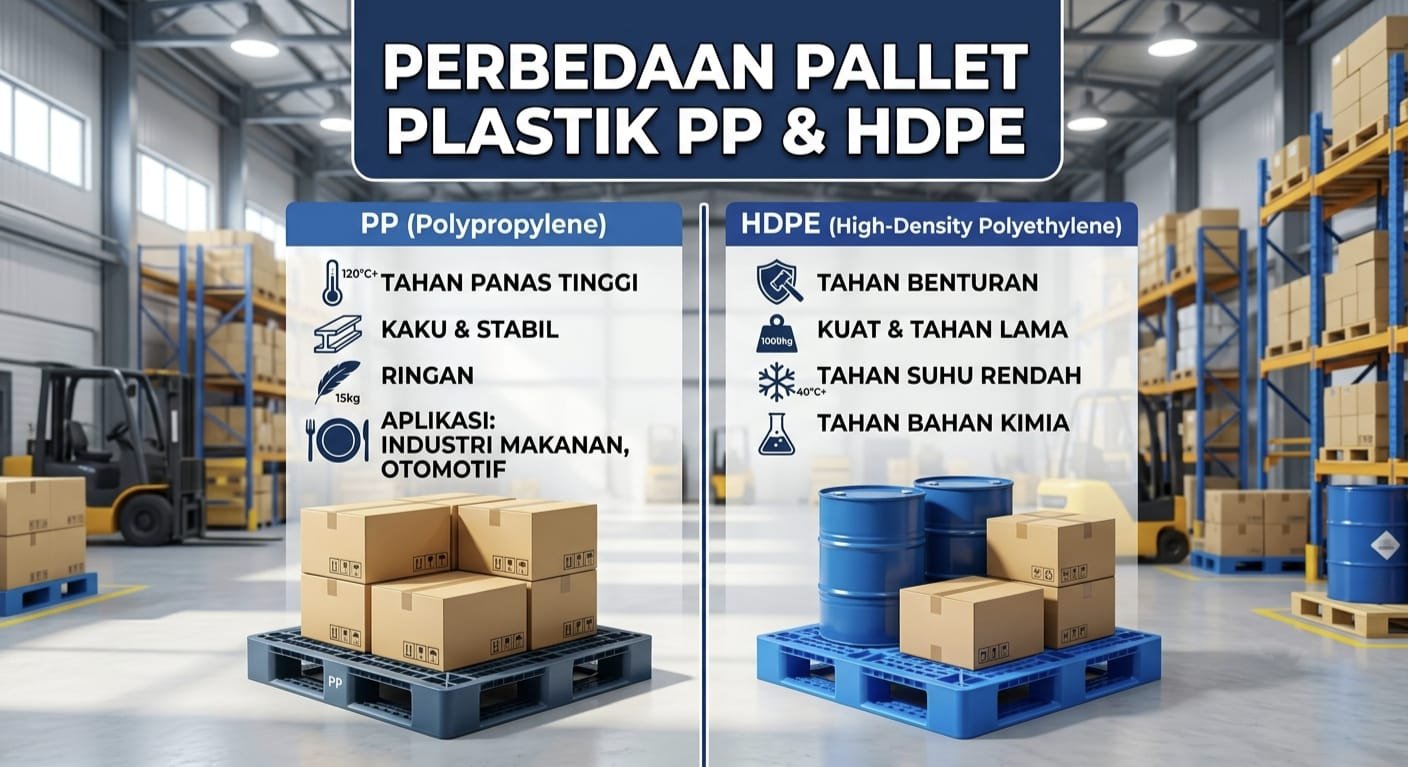
THE DIFFERENCES BETWEEN PP & HDPE PLASTIC PALLETS
Plastic pallets are one of the most widely used types of pallets in the industry for the transportation and storage of goods. There are two types of materials commonly used to manufacture plastic pallets: PP (polypropylene) and HDPE (high-density polyethylene). Although both are made of plastic, there are significant differences between these two types of pallets in terms of strength, flexibility, and recommended usage.
Polypropylene (PP)
Plastic pallets made from polypropylene (PP) are characterized as thermoplastics that are resistant to impact, heat, and chemicals. Compared to HDPE plastic pallets, PP plastic pallets have a superior level of hardness. This makes PP plastic pallets suitable for industries that require high load-bearing capabilities, such as the automotive industry. These pallets can withstand heavy loads and provide excellent stability during transportation and storage. Additionally, PP material is well-suited for warehouse racking and has a temperature resistance ranging from 0 to 60 degrees Celsius. When compared to HDPE, these pallets come at a higher price point.
High-Density Polyethylene (HDPE)
Plastic pallets made from High-Density Polyethylene (HDPE) have different characteristics than PP plastic pallets. HDPE plastic pallets tend to be more pliable or possess better flexibility than PP plastic pallets. Because of this flexibility, these pallets are highly suitable for stacking applications. Furthermore, HDPE plastic pallets also offer good resistance to impacts as well as exposure to strong acids and bases.
Another specific feature of HDPE plastic pallets is their temperature resistance, ranging from -40 to 60 degrees Celsius. Therefore, these pallets are ideal for cold storage. Moreover, HDPE plastic pallets have the advantage of being more affordably priced compared to PP plastic pallets. This makes them an attractive option for those who have a limited budget but still require strong and durable plastic pallets. Examples of HDPE plastic pallet applications include storage or shipping in the snack food, pharmaceutical, electronics, and other logistics sectors.
Choosing the Right Plastic Pallet Based on Material
Usually, the selection of plastic pallets heavily considers the type and size of the pallet. However, you should not overlook choosing a plastic pallet with a material that aligns with your specific goals. Determine your purpose for using plastic pallets, whether it is for warehouse storage or shipping. PP plastic pallets are suitable for racking bases in warehouses. Meanwhile, plastic pallets made of HDPE are also suitable for warehouse storage, with the added benefit of resistance to the cold temperatures of cold storage. By considering the manufacturing material of the plastic pallets, you can save on expenses and make the use of plastic pallets more efficient. This means you do not need to spend as much as you would on a PP pallet if an HDPE plastic pallet already meets your standard requirements.
When choosing between PP and HDPE plastic pallets, it is necessary to consider specific needs as well as budgetary factors. If strength and hardness are top priorities, PP plastic pallets might be the better choice despite their higher price. However, if flexibility and affordability are primary considerations, then HDPE plastic pallets may be the more suitable option.
“One-Stop Solution for Integrated Supply Chain & Industrial Support"