
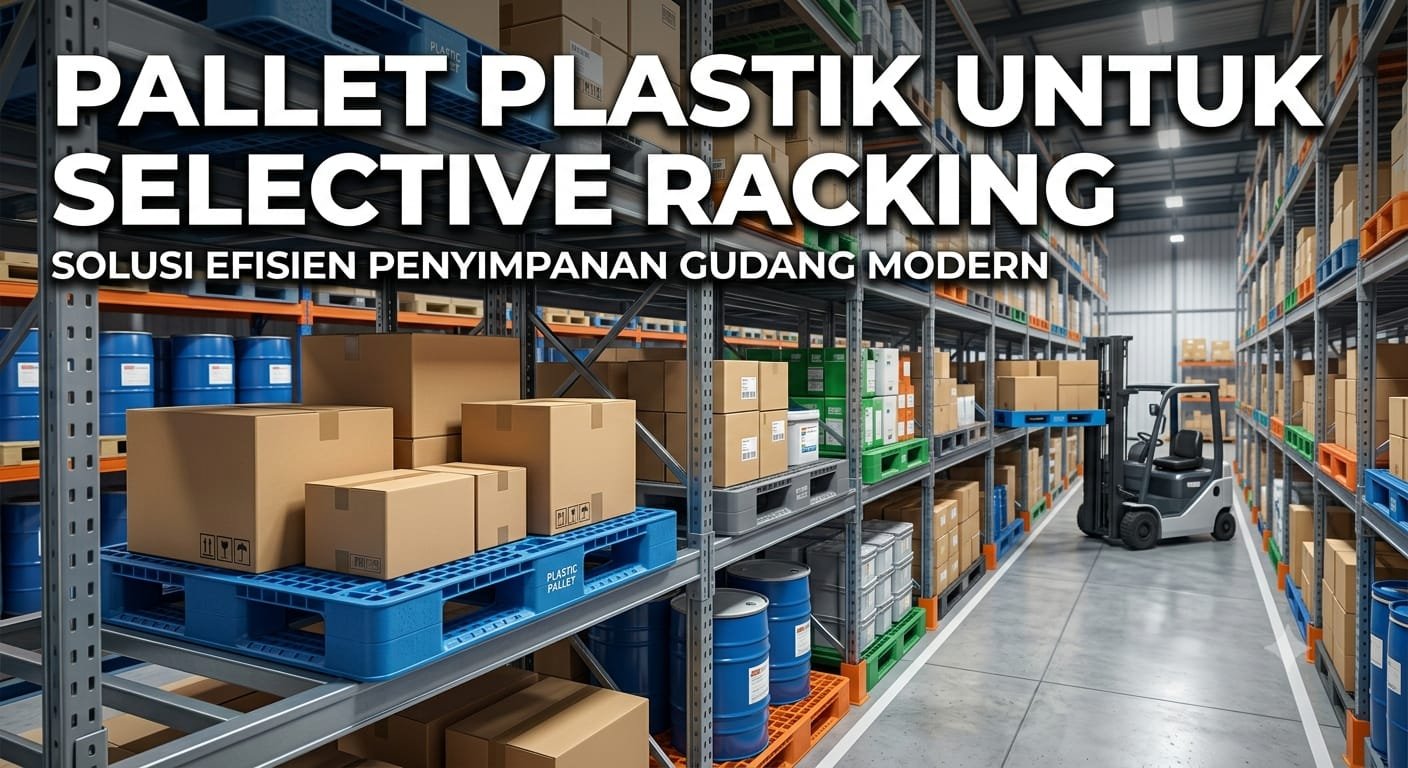
PLASTIC PALLETS FOR SELECTIVE RACKING
In every industry involved in distribution and storage, selective racking has become one of the most commonly used storage systems. Therefore, selecting the right plastic pallets is crucial for achieving operational efficiency and sustainability. In this article, we will discuss why plastic pallets are the optimal solution for selective racking and provide a guide to choosing the right type of plastic pallet.
Selective racking is a type of storage system designed to store and organize pallets, providing selective access to each pallet and commodity stored. The defining characteristic of selective racking is that every pallet or item can be accessed directly and independently without having to move other pallets in front of or behind it. This system consists of vertical racks supported by upright frames. Each rack has multiple horizontal levels where pallets are placed on beams or supports.
The Optimal Plastic Pallet Solution for Selective Racking
Plastic pallets are renowned for their durability, pest resistance, and long-term reusability. Some other advantages of plastic pallets for storage include :
1. Strong and durable : Plastic pallets are resistant to scratches, cracks, and insect infestations. In the long run, this advantage helps reduce maintenance and pallet replacement costs.
2. Dimensional consistency : Plastic pallets have consistent dimensions, which facilitates handling and ensures compatibility with selective racking systems. These pallets can also bear heavy loads well without the risk of breaking or warping.
3. Hygienic and easy to clean : Plastic pallets do not absorb moisture or chemicals. They are easy to maintain, making them more hygienic. As a result, using plastic pallets makes it easier to maintain the cleanliness of products stored in the warehouse.
Things to Consider When Choosing Plastic Pallets for Selective Racking
Warehouse plastic pallets are specifically designed for compatibility with racking systems. Given the numerous types of racking available, you need to know the essential features to look for when selecting plastic pallets for selective racking :
1. Appropriate dimensions : The size and model of the plastic pallet must match the specifications of the selective racking system used. Pay attention to the appropriate size, length, width, and height so that the pallet can easily move in and out of the racks.
2. Load-bearing capacity : Plastic pallets must have sufficient strength and load capacity to withstand the weight placed upon them. Ensure the plastic pallet has a load capacity that suits your needs and complies with the requirements of the selective racking system. Do not choose a plastic pallet with a load-bearing capacity below your requirements, as it risks damaging both the pallet and the commodities.
3. Compatibility with forklift access : Plastic pallets suitable for selective racking must be designed with forklift accessibility in mind. Ensure the pallet has the appropriate fork entry slots, allowing a forklift to easily lift and lower the pallet.
Plastic pallets are the right solution for selective racking due to their durability, consistency, and easy-to-clean maintenance. Selecting plastic pallets for this type of racking can help improve warehousing efficiency and save on pallet replacement costs due to their long-term durability. Choosing a suitable plastic pallet for selective racking is not overly complicated. All you need to consider is matching the dimensions between the plastic pallet and the rack, selecting a plastic pallet with sufficient load-bearing capacity, and ensuring compatibility with forklift access. This way, your pallets will last longer, facilitating warehousing activities and cutting costs.
If you have any pallet needs or simply want to ask a few questions first, please do not hesitate to reach out. We are ready to serve you wholeheartedly.
“One-Stop Solution for Integrated Supply Chain & Industrial Support"