
A COMPLETE GUIDE TO ISPM 15 STANDARD WOODEN PALLETS : DEFINITION, FUNCTION, & REQUIREMENTS
In global logistics and supply chains, the seamless international shipment of goods is a top priority. One crucial component that often goes unnoticed is the base on which these goods are placed: the pallet. If you are involved in export-import activities, you have likely heard the term ISPM 15 Standard Wooden Pallet.
But what exactly is ISPM 15 ? Why is this standard strictly mandated by customs authorities worldwide? This article covers everything you need to know about ISPM 15 wooden pallets, from the definition and manufacturing process to how to identify them.
What is ISPM 15 ?
ISPM 15 stands for International Standards for Phytosanitary Measures No. 15. It is an international standard developed by the IPPC (International Plant Protection Convention), a body under the UN’s Food and Agriculture Organization (FAO). This standard regulates the specific treatment of wood packaging materials (including pallets, crates, and dunnage) thicker than 6 mm used in international trade.
The primary goal : To prevent the international spread of plant diseases and wood-destroying pests (such as insects, beetles, or termites) that could threaten agricultural and forest ecosystems in destination countries.
Why Must Wooden Pallets Meet the ISPM 15 Standard ?
Using non-ISPM 15 certified wooden pallets for export carries significant risks for shippers, including :
- Risk of Rejection at Destination : Customs authorities have the right to detain, quarantine, or even return the entire cargo to its country of origin if the pallets used lack the ISPM 15 stamp.
- Protecting the Global Ecosystem : Wood pests carried from one continent can become invasive species that destroy forests or plantations in another, ultimately triggering billions of dollars in economic losses.
- Improving Pallet Quality : The ISPM 15 treatment process reduces the moisture content of the wood, making the pallet drier, stronger, and less prone to mold.
2 Main Methods of ISPM 15 Treatment
For a wooden pallet to pass the ISPM 15 standard, the raw wood material must undergo one of two globally approved treatment methods:
- Heat Treatment (HT)
This is the most environmentally friendly and widely used method today.
– Process : Wooden pallets are placed in a heating chamber (kiln dry).
– Requirement : The core temperature of the wood must reach a minimum of 56°C and be maintained for at least 30 minutes.
– Result : This heat is scientifically proven to kill all life stages of pests (eggs, larvae, pupae, and adult insects). - Methyl Bromide Fumigation (MB)
This method uses chemical gas to kill pests.
– Process : The wood is isolated and sprayed with Methyl Bromide gas at specific doses and durations according to operational standards.
– Note : Although still recognized under the ISPM 15 standard, this method is increasingly being phased out and banned by several countries (such as in the European Union) due to its negative impact on the ozone layer.
How to Identify an ISPM 15 Pallet (Reading the IPPC Stamp)
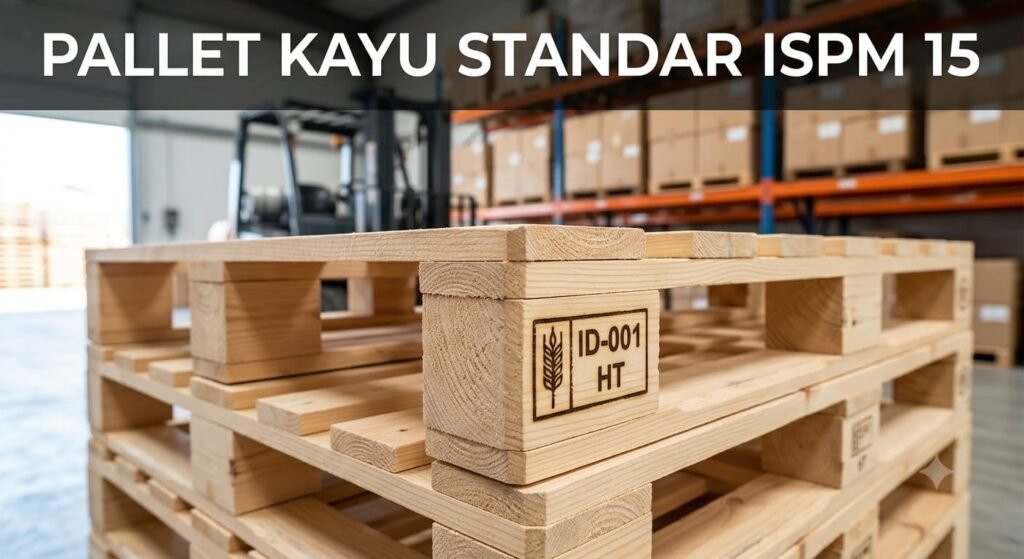
The physical proof that a pallet meets the ISPM 15 standard is an official IPPC logo branded (stamped or burned) on the left and right sides of the pallet. This stamp cannot be handwritten and must be easily legible. Here is how to read the components of an ISPM 15 stamp:
- IPPC Logo : A standardized symbol resembling an ear of wheat with “IPPC” written to its left.
- Country Code (XX) : The two-letter ISO country code where the treatment was performed (Example: ID for Indonesia).
- Producer Code (000) : A unique registration number of three or more digits assigned to the pallet producer by the local plant quarantine authority.
- Treatment Code (YY) : The method used. HT for Heat Treatment or MB for Methyl Bromide.
(Example stamp format typically looks like: ID – 123 – HT)
Material Exemptions: Is All Wood Packaging Subject to ISPM 15?
Not all wood-based materials must follow this standard. Processed wood materials that have undergone high heat, glue, or extreme pressure during their production are exempt from ISPM 15. Examples include:
- Plywood
- Particle board
- MDF (Medium Density Fiberboard)
- Sawdust or wood cuttings less than 6 mm thick
- Plastic pallets, metal pallets, or cardboard pallets
For companies engaged in exports, understanding and using ISPM 15 Standard Wooden Pallets is not merely an option, but an international legal obligation. Choosing a pallet vendor with official IPPC certification is a strategic step to ensure the security of your cargo, avoid unexpected fines, and maintain the trust of overseas clients.
“One-Stop Solution for Integrated Supply Chain & Industrial Support”